News Categories
Latest News

NASA's New Horizons spacecraft wakes from its longest hibernation in good health - Phys.org
Following its longest hibernation period ever of nearly a year, NASA’s New Horizons spacecraft has emerged in good health and is ready to begin transmitting science data gathered in the distant Kuiper Belt far beyond Pluto.

Asteroid 16 Psyche, a metal-rich world roughly 225 kilometres wide orbiting between Mars and Jupiter, may contain extraordinary amounts of iron and nickel — enough that back-of-the-envelope estimates have put its theoretical metal value at around $10,000 - Space Daily
The number attached to asteroid 16 Psyche is so large that it almost stops being a number. Around $10,000 quadrillion. Ten quintillion dollars. More than the
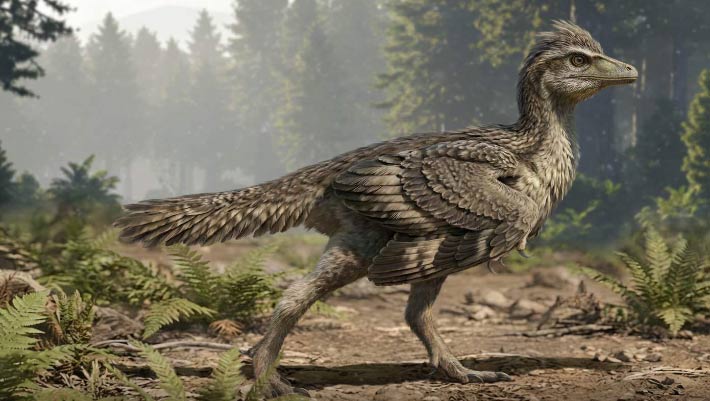
New Jurassic Fossil Reveals How Birds Lost Their Dinosaur Tails - Sci.News
Paleontologists in China have described a small, previously unknown Jurassic bird whose short tail offers new evidence for how the earliest birds traded their long, dinosaur-like tails for the compact tailbone that helps living birds fly.
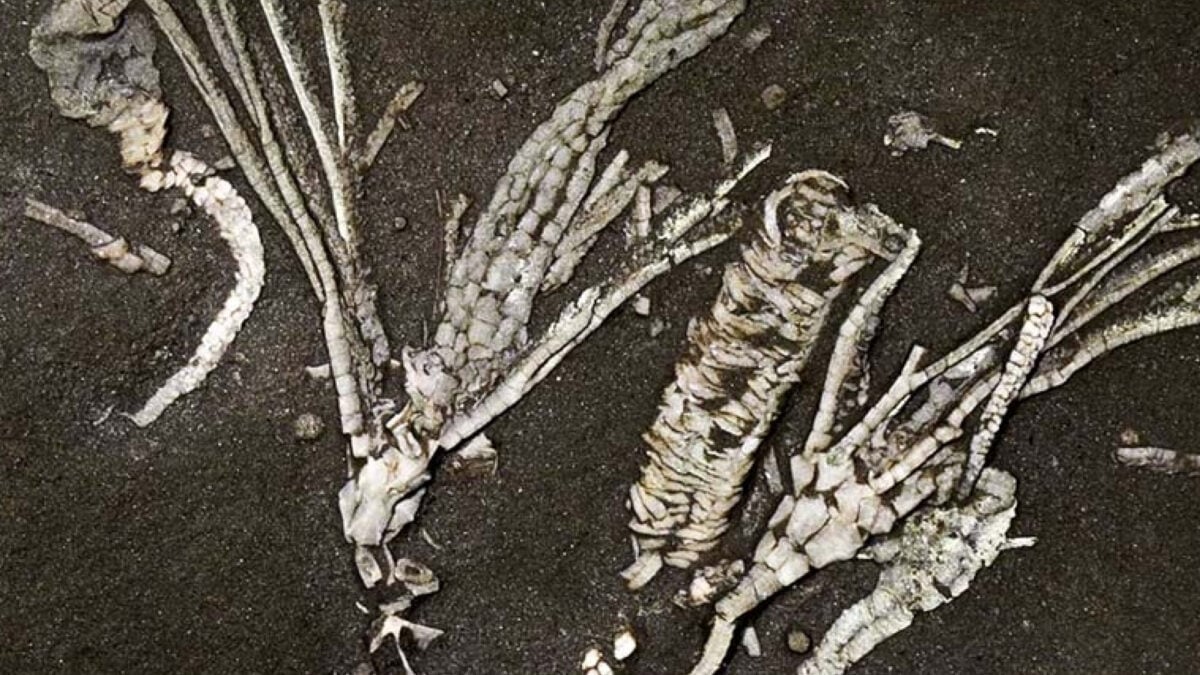
Scientists Find Super-Rare Soft Tissue Fossil From 450-Million-Year-Old Sea Creature - Gizmodo
Crinoid fossils turn up by the millions, but this is just the second time that scientists have found one with soft tissues still intact.

Steering light in a flash: New chip redirects light beams in less than a trillionth of a second - Phys.org
Light can carry enormous amounts of information at extreme speeds, making photonic technologies promising for the development of faster communications, more powerful computing systems and more sensitive sensors. But for light to be useful for these purposes, …

Mysterious Compound Detected on Pluto and Titan - WIRED
Something on Pluto and one of Saturn’s moons, Titan, absorbs light in a way unexplained by anything in spectroscopic databases.