News Categories
Latest News

A decade of carbon dioxide data from space gets an upgrade - Phys.org
Every day, two NASA space instruments known as the Orbiting Carbon Observatory-2 and -3 (OCO-2 and OCO-3) capture more than a million observations of sunlight reflecting off Earth’s surface. Using the physics of how light travels through the air, an algorithm…

Remember that fireball over Cape Cod? Researchers have traced the meteorite’s journey. - The Boston Globe
The meteor traveled at about 58,000 mph and released a staggering amount of energy, the equivalent of about 500 tons of exploding dynamite.

Quantum skyrmions outlast entanglement, hinting at more resilient networks - Phys.org
Quantum networks could one day connect quantum computers into more powerful systems and enable new forms of secure communication. But a fundamental obstacle stands in the way: Quantum information is extraordinarily fragile, and the entanglement between partic…
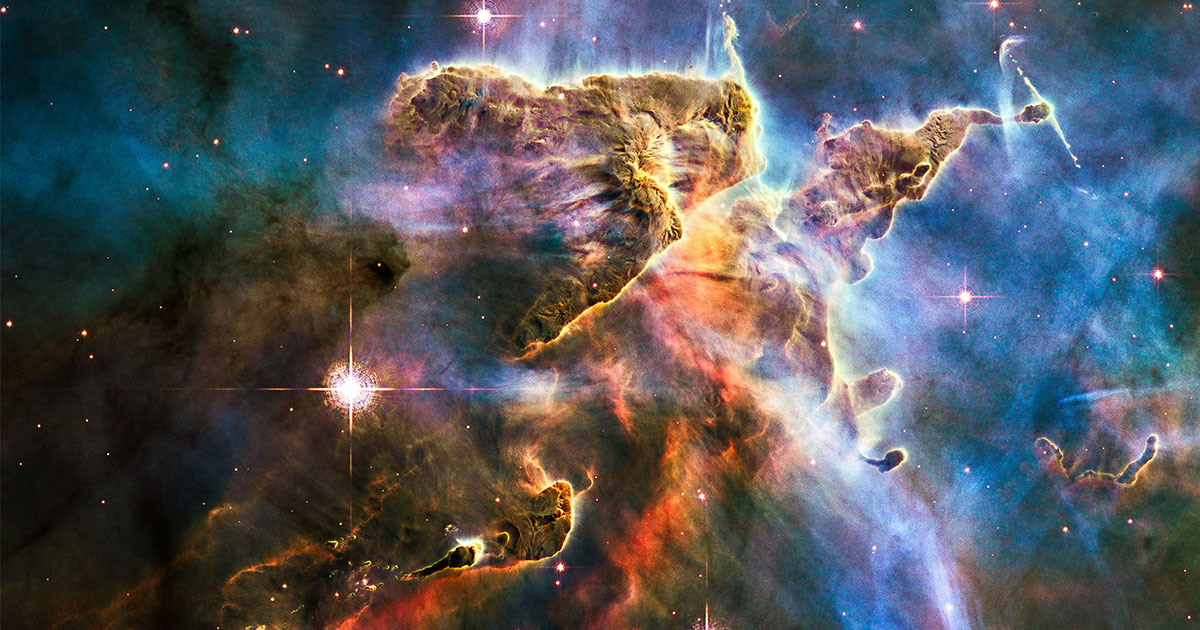
A New Map of ‘Empty’ Space Challenges a Tranquil Picture of the Galaxy - Quanta Magazine
For decades, astronomers treated the interstellar medium as a static backdrop to the goings-on of the universe. Now, a wave of 3D mapping is bringing the interstellar medium’s dynamic nature into focus.

NASA's Voyager 1 conserves power, resolves brief communications pause - Phys.org
NASA’s Voyager team is celebrating two recent developments with the Voyager 1 spacecraft: In September, they successfully completed a months-long effort to stretch the spacecraft’s diminishing power supply. Then, on Oct. 20, an unexpected loss of communicatio…

Marine fossils in Colombia reveal possible evolutionary transition without mass extinction - Phys.org
A remarkably diverse fossil ecosystem in central Colombia that preserves an unusual overlap between survivors of older Jurassic groups and newer Cretaceous lineages has led researchers at McGill University and the Centro de Investigaciones Paleontológicas (CI…