News Categories
Latest News

NASA’s Artemis ‘Course Correction’ Boosts Moonward Momentum: Key Details Still Maturing - NASASpaceFlight.com -
NASA Administrator Jared Isaacman unveiled sweeping changes to the Artemis program, aimed at restoring momentum,…

Salt may have pushed us further into Snowball Earth 700 million years ago - Phys.org
Our planet plunged into one of the most dramatic climate states in its long history, approximately 720–635 million years ago. During a period geologists call Snowball Earth, ice sheets crept from the poles all the way to the tropics, covering the oceans and c…

Stars like our sun may maintain the same rotation pattern for life, contrary to 45 years of theoretical predictions - Phys.org
Researchers at Nagoya University in Japan have conducted the most detailed simulation of the interior of stars and disproved a theory scientists have believed for 45 years: that stars switch their rotation patterns as they age, with poles rotating faster than…

Psychology says mothers who can identify their son's mood from the way he says hello on the phone have developed these 6 attunement patterns — and the speed of that reading is something researchers say no other relationship in a man's life will ever repl - Silicon Canals
Scientists have discovered that mothers who can instantly decode their son’s emotional state from just two words on the phone have developed a neurological connection so profound that it triggers the same hormonal response as a physical hug—creating a bond th…
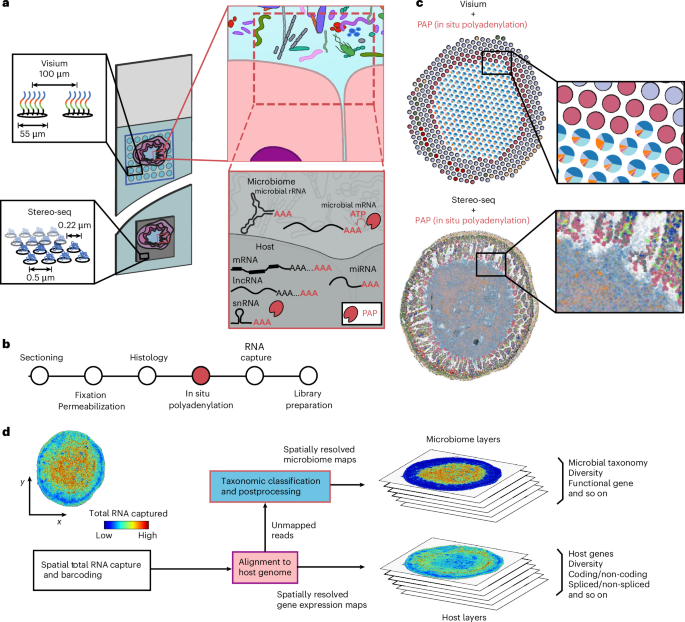
Spatial transcriptomics maps host–gut microbiome biogeography at high resolution - Nature
Bulk polyadenylation improves the capture of microbial RNA, enabling host–microorganism interactions to be visualized at a high resolution when combined with commercially available spatial transcriptomics platforms.

Largest known Mesozoic crocodyliform egg clutch discovered in Brazil - Phys.org
In a study published in the Journal of Vertebrate Paleontology, researchers Dr. Giovanna M. X. Paixão and her colleagues analyzed the fossilized remains of three Upper Cretaceous egg clutches. One of these clutches, totaling 47 eggs, is the largest known Meso…