News Categories
Latest News

New analysis reconstructs the dawn of dinosaurs and other reptiles - Phys.org
About 252 million years ago, at the end of the Permian Period, a large proportion of species on Earth rapidly became extinct. After this mass extinction, many groups of organisms began to recover, while reptiles known as archosauromorphs—the group that includ…

Modern humans interbred with Neanderthals before they disappeared, and most people of non-African ancestry still carry roughly 1 to 4 percent Neanderthal DNA today — meaning part of the human population we once thought we simply replaced never actu - Space Daily
The fossil record suggested modern humans simply wiped out their evolutionary cousins, but genetic evidence now reveals a messier, more intimate history of coexistence and interbreeding.
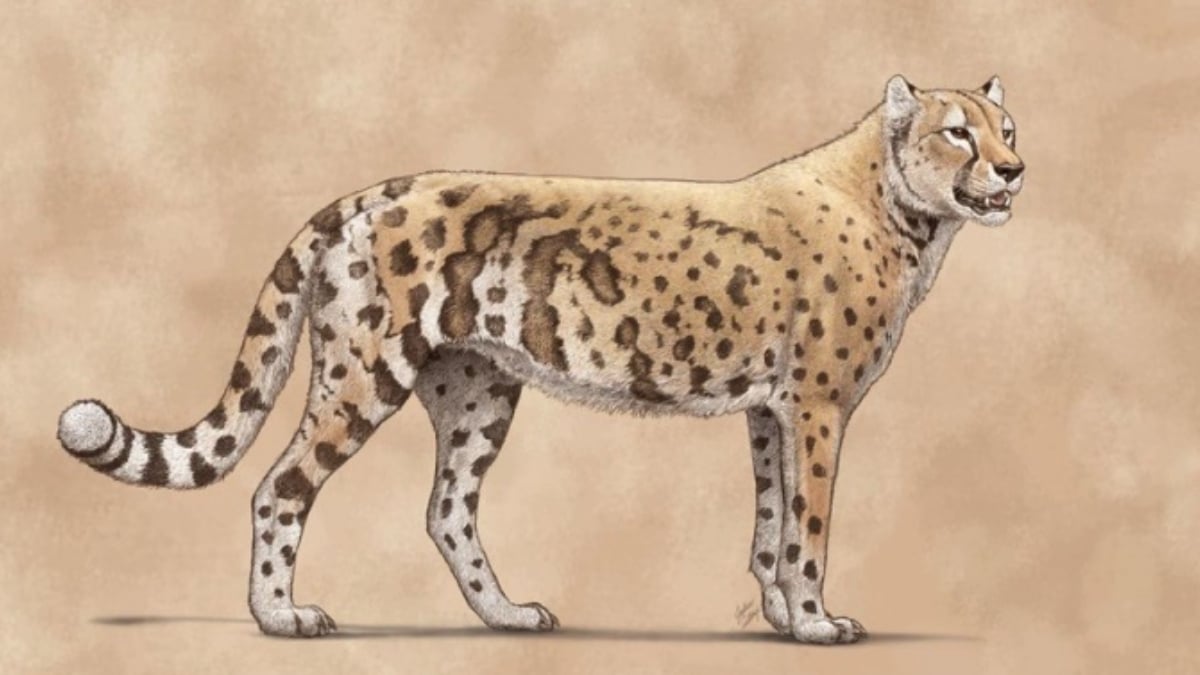
The 'American Cheetah' Was Actually a Different Animal All Along - ScienceAlert
The Ice Age movies get one major thing right: Climate shifts and glaciation caused profound animal migrations and evolutionary adaptations – though it’s uncertain if any of them resulted from an acorn-burying saber-toothed squirrel splitting a continent. Dur…

We thought the Universe was the same everywhere. But it turns out it could be much stranger than we'd imagined - BBC Sky at Night Magazine
We assume the Universe looks broadly the same no matter where you are or which way you look. A study is throwing that assumption into doubt.

A 14-year-old in New York folded 54 variations of the same origami crease pattern and stacked dumbbells on them to see which collapsed — the winning fold held more than 9,000 times its own weight, the design is aimed at flat-pack disaster shelters, and it to - Space Daily
A teenager’s systematic crushing of folded paper revealed an origami design that could revolutionize emergency shelters—and won him science’s biggest middle-school prize.

After more than 50 years, a solar telescope in New Mexico is being pulled down, after liquid mercury from the bearing that let its 250-ton optical system turn was found inside the tower. Crews found the metal on January 5. - Space Daily
A half-century-old innovation—liquid mercury that let a massive telescope glide frictionlessly—has become an environmental hazard too risky to remediate.